Must I? Yeah, it pays!
The Real Anne Hathaway
Restrained? Anne Hathaway? I mean, really, there are those who believe she took some kind of rock ‘n’ roll doctor’s prescription cocktail of something like Ritalin and Demerol, but I think that would be unkind. Okay, I confess I embarrass easily and the sheer biblical drama of her collected speeches from the Golden Globe, BAFTA and SAG awards for best supporting actress in Lés Miserablesn had me holding my breath. Having been the subject of a thousand gags by Jon Stewart, Bill Maher, David Letterman, Joan Rivers, Bill Zwecker about the manner in which said thespian wears her Pittsburgh-sized heart on her sleeve, the lack of shrill desperation in her gratitude-besotted speech was almost subtle to the point of poignancyncompared to its predecessors.
Prone to throwing instantaneous pity-parties when discussing her disastrous gift at finding, dating and even marrying a veritable inventory of scores of rogues, pseudo-aristocracy and plain old con-artists at the expense of her own thespian kind, Anne has tended to unburden herself repeatedly at the wrong place at the wrong time. Well, at least according to Anne that is.
Her four year affair with one Raffaello Follieri saw him sentenced to five years in federal prison for fraud, conspiracy and money-laundering. After their split, Hathaway didn’t lose a step in between the hand-wringing and tears shared on the usual round of talk shows. Her personal drama definitely didn’t interfere with her work as she received an Oscar best actress nomination for her role in Rachel Getting Married. Now involved with Hollywood wheeler -dealerAdam Shulman, Hathaway claims to be as trusting as ever. “It takes a minute for me to let my guard down, but once I do and I get to know someone, I’m very open, very trusting. Some might say too trusting.” Yet, for those who love her doe-eyed, half-frothy goo-goo good days persona, there’s the inverse dump-truck demeanor, it’s all in a good cause. The woman just wants to be liked!!!
Was she good in Les Miserables? Well, not if you’re a snob like me and love Victor Hugo’s novel. Beyond Hugo spinning in his grave, however, there really is the truth that Fantine is not the Audrey Hepburn-Lite gamin with huge, beautiful American gravestone teeth Hathaway envisions, but more some kind of busty, sexy semi-naïf with the chops and physical architecture of, say. a Helena Bonham-Carter.
If, as she kept insisting on so many of her cameos on the Monday morning shows, Hathaway really does genuinely want to be taken seriously, she needs to learn something about integrity and self-censorship from the woman she has described as her role-model , Meryl Streep. Indeed, for those who develop amnesia vis-à-vis watching the celebrity ring-around-the-roses Hathaway actively participates in, there’s the mini-scandal involving her arrival her arrival in a skintight dress celebrating her role as cat Woman. With these photos on the net faster than Janet Jackson's nipple or Britney Spears’ shaved vagina, Hathaway then had the, umm, moxy to use the press and the wardrobe malfunction to draw attention to such social issues as a child prostitution, sex trafficking the importance of being a vegan. Who would have thought one might take a moral stance on a wardrobe malfunction? Indeed, the cocky actress noted that her character in Les Mis was also, despite her innate goodness, swept away into the nightmarish world of the sex trade.
Monday, March 4, 2013
Tuesday, September 18, 2012
The Princess Gets Wed
October is on its way.
The wetted browns of New England give way to the white
sands of Florida.
In the old days, the pigs on your abuela’s finca would be
getting fat.
Pigs are no geese, you know.
They lay no golden eggs, just wee porkers.
Actually, there have been no golden eggs since you were
born.
Times have been hard,
straw has fallen well below market price.
No matter which way I spin it, as I repeatedly point out,
your kingdom, or should I say princessdom, your subjects.
All of us.
We wait expectantly.
How did that pea get under your posturapedic in the first
place?
We are sorry: Your mom, your servants, and I.
We apologize.
I, oh-so-humbly acknowledge that
it’s nobody’s fault,
Which is why I fired Berengeria, your chambermaid.
A gesture of ruthless power and ego on my part,
but to raise a Princess takes a hard heart.
Just ask my frog footman.
During our time-and-motion research tour of the lily pond,
you kissed the frog.
He then asked me for your hand, but remained truculently
froggish.
Please accept the Three Wishes granted by your plebeian
fan club.
Good hair. Good nails. And storage for ten million pairs of
shoes.
Hopefully this will heal the schism caused by the rebellious goth elves.
Who could have predicted the lowered output at the black
nail polish factory?
The wildcat strike by the glass slipper cobblers?
The redundancies. The jobs farmed out to Timbuktu.
Yet, meanwhile, nonchalant and hungry,
you ate the bruja’s apple,
so that you and your whole royal court slept.
Slept and slept and slept for six-and-a half years.
Only to be awakened by a kiss
from your non-somnolent frog friend.
Having never walked a mile in your pumps,
let me reassure you of my empathy.
Considering the status quo and your circumstances,
I empathize with your reluctance to let down your lovely
tresses. But, as I so noted earlier, winter is on its way, my
rheumatism is acting up
and your guests have traveled far to reach the peripheries of
your magic kingdom.
Many of your ungrateful courtiers are gossiping obstreperously,
wringing their hands, demanding free medical care.
Yet, your mother and I, we have been standing here,
not to mention the 3,000 plus guests and villagers, waiting
at the base of your White Tower. Waiting.
As you said, Yea and were on your royal way.
Monday, March 19, 2012
Straw Dogs*
Is there a purpose to remakes? Aside from maybe William Friedkin’s attempt in Sorcerer to re-imagine Georges Clouzot’s The Wages of Fear as something universal rather than Gallic, it’s usually just an exercise in regurgitation. This awful remake of Sam Peckinpah’s already deeply flawed but nobly imagined Straw Dogs(1971) is an typical case in point.
In the original, Dustin Hoffman and the endearingly scrubber tartish Susan George are a mixed class and religion-type couple oppressed and besieged by small town English country boy thugs. The slightly cross-eyed George is a dreadful actor, but her custard-dyed tresses and their black roots make for an endearing metaphor for the kind of deluded love match only the actual couple involved can never get past their sexual compatibility to see holistically until its too late. Sure, Hoffman chews the scenery, as per usual, but as George can’t act her way out of a wet bag, we feel pity for her. It was nowhere near a great film, but Straw Dogs was a huge box-office boffo hit at the time because it helped define the way rape and violence could be rendered palatable for both intellectual and voyeuristic thrill-seeking audiences by being photographed on grainy stock with lots of hand-held ‘chaotic’ shots. At a time when A Clockwork Orange left a lot of audiences feeling guiltily entertained but stupid, Peckinpah’s work could be written off by feminists as chauvinistic, and be used by the likes of me as great gender debate material that often got me laid!
In the new Straw Dogs, the roughage of all kinds is more or less exorcised. It simply becomes one more vengeance tale shot in the South, with good ol’ boy dialect and the usual redneck clichés replacing England’s West Country. Interestingly, Dustin Hoffman’s academic Jewboy mathematics nerd is replaced by a bookish but groovily in-shape goyish screenwriter David played by the square-jawed James Marsden. And how do we know he’s a nerd? Well, umm, he doesn’t watch football, he openly talks the talk about being an atheist and because he believes that the podunk town his wife comes from, Blackwater, Mississippi, offers something he can’t find in the Sodom and Gomorra of Los Angeles while he’s working on his screenplay masterpiece. “I like quiet!” he says. “Quiet is what I want!”
Meanwhile, his lovely blondie actress wife Amy(Kate Bosworth) is kinda/sorta ambivalent. Her tresses are tinted much nicer than George’s. After being written out of a T.V. show in which she was a regular, returning to Blackwater is both comforting and a razor-keen reminder of her roots. What to make of the local folk who dress like Larry the Cable Guy and all the women in old Burt Reynolds movies? Things go from bad to worse at the bar when David orders Lite beer and dares to pay for everybody’s libations with a --oh my God!-- a credit card! Well, all except Charlie (Alexander Skjarsgard) who ogles Ay-ma like a hungry glutton regarding a roast. Turns out Charlie, who ingratiates himself enough with David to get himself and a crew of pals hired to fix David’s rickety old roof has wickedness on his mind. Of course, it turns out Charlie and Ay-ma have a history.
David immediately clashes with Charlie and the crew when he objects to their raiding his fridge and playing Lynyrd Skynyrd and various other samplings of old school Southern rock at dawn. Not, however, enough to confront them. David seethes politely, while Ay-ma obsesses on David’s inability to confront anybody belligerent. Charlie and his boys act just like those mean ol’ big shots in Hollywood
Unfortunately, the neo Straw Dogs cuts out the major subplot of the original which involved a ’Special’ local who rapes adolescents and a clever bit where the workers are served a saucer of milk by an ambivalent Ay-ma after murdering the couple’s cat and hanging its corpse in a closet. Instead of rural ruthlesness and culture at war with David’s citified Jewboy sensitivity and over education, the conflict becomes moronically oversimplified and obfuscated between David’s liberal softy persona against redneck love of Jesus, football and guns. Indeed, one of Charlie’s crew’s obnoxious 4x4 truck has a bumper sticker that says: ‘Keep honking. I’m reloading!’ Ha! Ha! I get it. Jesus loves guns! Even the usually solid character actor James Woods can’t do much with the role of a jaded high school football coach who has turned all these twisted moronic redneck lumps of human clay into a team of rapists. This is because the script by Rod Lurie is so crass. Is this the Rod Lurie who wrote the brilliant The Candidate? My God, what happened?
Sex-wise, you get your money’s-worth of the usual stereotypes that so puzzle us big city hypocrites when we go slumming it in trailer park land. All these church going Protestant females seem to dress provocatively, but, you know, it’s the heat!!! The locals stare at Amy as she jogs braless around the neighborhood and you realize that they don’t sell sports bras in Mississippi for that reason. At any rate, Charlie and the boys ogle Ay-ma just too damned overtly. She tells David and what does he do? Yes, he suggests she dresses more, umm, demurely. “Oh, I dress for you!!!” she insists, but is soon seen getting fresh with the local boys again and peeling off her clothes like a serpent in mating season for all the workers. Hmmmm!
The rest of this yawn-inducing dross involves convincing the audience that the local males and females feel so hurt by David’s walking out of church in the midst of a sermon that they’d all passively participate or turn a blind eye to a gang rape. Thus when David--still supposedly uncomprehending of the fact that this redneck collective believes it owns the moral high ground--is confronted by Ay-ma, who would rather scream at him than call the authorities, he becomes the instrument of virtuous vengeance. The massacre which follows is neither cathartic nor even fast food for thought . He does, however, do more with the bear trap than Peckinpah! Good job with the bear trap, Rod!
Alexander Skjarsgard, who plays Ay-mas old high school boyfriend Charlie so well, actually brings so much gravitas to the part that Marsden and Bosworth look lost. The subplot , involving high school football and religion, makes the movie’s fulcrum teeter on the edge of being a red-blue mini-war. Avoid this rubbish at all costs!
My Internist Prescribes
Guess it depends on which of your three eyes that you look at it with.
All I see, floating around me, is detritus.
The detritus of denied intimacy.
The detritus of the glib.
Like beautiful Venezia, you float in your gondola
and ignore the surfing turds.
Peripherally, if you take the time to stuff cotton wool up your nose,
there is the rennaissence,
gargoyles in repose.
Pretty girls chinning crumbling window sills.
Perry Como crooning.
A strand of DNA showing off, curtsying,
vaguely remembering my ancestors days of slavery in Mitzrayim.
A goddamn melodrama in my arteries.
My internist prescribes,
I obey.
The pills are orange and yellow and a gruesome sort of flecked turquoise.
I wash them down with lukewarm water
and the eye at the back of my head winks.
During My Life
During my life.
Communism died, but it keeps making gurgling noises slightly out of earshot.
My mom split.
My dad died of lymph node cancer and toxic shock.
I flew back to Chicago and taught Frosh Comp
and my students wrote papers about why they owned guns.
This was the alternative to going into exile and looking for God.
God who runs away when you look for him.
In my dreams. In my dream life.
Hitler gets to be a painter. A shitty painter, but a painter nonetheless.
My mom stays and smells of hollyhocks and mothballs.
My dad dies again,
but this time I’m in Maui drowning my sorrows in big-titted Calpurnia.
God stays.
He looks a bit like Victor Buono. It’s unnerving.
He sits at the hotel bar telling war stories: Sarajevo, Stalingrad. Tet.
During my life
the best alternatives come from mulling on my thesaurus.
That’s about as good as it gets outside a good curry.
During my dreams. During my dream life.
I resurrect the dead and, when I get bored, I bury them again.
Ivor Irwin
Christmas Night in Chicago
I find you elbowed up to the bar,
bored, crunching ice cubes. Your English underwear tight.
Wiggling the backwash of your mortally wounded soldier.
Fidgeting, sucking your teeth,
dying for a cigarette,
staring at the bar tender’s artificial tits.
“Those are not real!” you complain.
You complain a lot.
Because it’s not L.A.
Because the snow is a dirty gray.
Because you had to shovel.
Because. Because. Because.
The bartenders’s bolt-on breasts not withstanding,
I thought you were having a good time.
Doing your little dance on my dime.
Instead, it keeps creeping back, this thing you cannot understand.
Why I don’t live somewhere in the sunbelt.
Live a less funky representational Yule Tide.
Friday, December 2, 2011
Ivor's Coconut Fish Curry
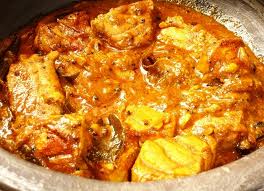
Some, indeed, like it hot. This fish curry is marvelous, and, although I own a personal preference for Red Snapper or salted cod(bacalao), pretty much any kind works. The amount of heat you use can be altered to your taste. An oily fish like like cod definitely demands something pungent to contrast with the strong oil of its flesh. If mustard oil is unavailable, use mustard seed in safflower or canola oil, marinating for three or four days if possible.
Ingredients:
4 lbs White fish fillets, cut into cubes
For the marinade:
- 4 tsp (4 g) Turmeric (haldi) powder
- 2 tsp (8 g) Salt
- 1 cup Mustard (sarson) oil
- 6 tbsp Garlic (lasan), finely chopped
- 4 tsp Cumin (jeera) powder
- 4 tsp (4 g) Turmeric powder
- Salt to taste
- 4 tsp Red chilli powder
- 40 Curry leaves (kadhi patta)
- 4 cups Coconut milk, thick, from 1 whole grated coconut
- 1/2 Cup Tamarind pulp, boiled in 2 cups of water and then strained
- 4 Green chillies, deseeded
- 4 Papaya
- Basmati rice
- 1 Lemon
- Rub the turmeric powder and salt into the fish thoroughly. Place in the refrigerator for two hours.
- Heat the mustard oil until it begins to smoke; fry the marinated fish cubes until they’re a golden color. Remove the fish cubes with a slotted spoon, draining the excess oil on paper towels.
- Use the same oil to fry the garlic light brown. Add the cumin powder, turmeric, salt, red chilli powder, curry leaves, coconut milk, tamarind extract, and green chillies.
- Stir rapidly and bring to the boil before adding the fried fish cube, lower trhe light and simmer gently for 5 minutes.
- Cut each papaya in half. Skin and seed. Place the papaya in the freezer 30 minutes before dinner will be served.
- When all is ready, serve rice for eight and squeeze the juices of the lemon on the cold papaya.
Wednesday, November 30, 2011
R o g a n J o s h L a m b

* Cooking t i m e 7 0 m i n u t e s
* S e r v e s 6
Ingredients:
A 2 inch knob of fresh ginger, peeled and coarsely chopped
12 Cloves garlic
4 cups pink wine
2 cups vegetable oil
2 Ibs cubed lamb
10 cardamom pods
4 bay leaves
6 cloves
20 peppercorns
1 medium Cinnamon stick
4 medium onions, peeled and chopped fine
2 tsp ground coriander
3 tsp ground cumin
4 tbsp paprika
2 tbsp cayenne pepper (or, if you want to grow hair on your toes, boil, skin and mash 2 habanero/scotch bonnet peppers)
1 tsp kosher salt
2 cups natural yogurt
1 tbsp garam masala
Blend together the ginger, garlic, and two cups of ice cold water into a smooth paste. Brown the meat along with one of the onions, two cloves of garlic along with two cups of wine. Once it’s browned, set aside. Heat the oil in your favorite heavy-duty skillet over a medium flame. Fry--all the while stirring gently--the cardamom pods, bay leaves, cloves, peppercorns and Cinnamon in the oil. Add the rest of the onions, stir fry until the onions are golden brown. Then slowly add the garlic-ginger paste and stir in for a minute, then gently add the coriander, cumin, paprika, cayenne and salt. Stir and mix for a couple of minutes. Add the meat and its juices, mix well so it’s all coated with the paste. Add the tablespoon of yogurt, mixing well on low light before gradually adding the rest of the yogurt, stir and fry for another three minutes. Add another two cups of water, bring it to a low, rolling boil, while scraping away the sticky bits from the bottom of the pan into the sauce. If you would like it to taste a little sweeter use more pink wine.
Cover the pan and simmer on a low light for 80 minutes, checking and stirring the pot every ten minutes or so. The sauce should slowly turn viscous and bubbly, but not too thick. If it is thick enough that the spoon sticks, you need more liquid and should add wine or water. Finally, spoon off the excess fat, sprinkle the garam masala and black pepper and mix one last time before serving with basmati rice and nan.
.
Wednesday, November 16, 2011
For Elsie
Each night
before I get some kip
I think about
Ebola, Al-Qaida, starving Sudanese,
Barack Obama, pornography and war.
That way
I’m not thinking about You!
before I get some kip
I think about
Ebola, Al-Qaida, starving Sudanese,
Barack Obama, pornography and war.
That way
I’m not thinking about You!
Indian Eggplant (Burtha)

Ingredients
1 eggplant, or 2 large Chinese eggplant
2 tablespoons vegetable oil
1/2 teaspoon cumin seeds
1 medium onion, sliced
1 teaspoon chopped fresh ginger
1 large tomato - peeled, seeded and diced
1 teaspoon cayenne
1 clove garlic, minced
1/2 teaspoon ground turmeric
1/2 teaspoon ground cumin
1/2 teaspoon ground coriander
1/2 teaspoon salt, or to taste
Ground black pepper to taste
1/2 cup chopped fresh cilantro
1/2 cup frozen peas
Directions
1. Preheat the broiler in your oven. Rub oil on the skin of the egg plant, or coat thoroughly with cooking spray. Place under the broiler, and cook until the flesh is soft and the skin is bubbling and beginning to blister off, app. 30 minutes. Turn when necessary for even cooking. Slice the eggplant in half lengthwise, scoop the flesh out of the skin, discard the skin; chop up the flesh, and set aside.
2. Heat oil in a large skillet or wok over high heat. Add the cumin seed still they crackle for a few seconds and turn golden brown. Act fast. Do not let them burn! Add the onion, ginger and garlic; cook and stir until tender. Lower the heat after two minutes to medium. Do not let the onions get too brown. Stir in the peas and tomato, and season with turmeric, ground cumin, ground coriander, cayenne pepper, salt and black pepper. Cook and stir for a few minutes.
3. Place the eggplant pieces in the skillet, and cook for 10 to 15 minutes until most of the moisture evaporates. Taste, and adjust seasonings if desired. Garnish with fresh cilantro, and serve.
Stop Snivelling: Make Your Own Vindaloo Paste
 |
| Lamb Vindaloo: Mmmmmhmmm! |
Anyone who follows my football site knows I just took my youngest home to England to watch Manchester United destroy Spurs and Arsenal. The second order of business was food. They call it the Curry Mile and us Mancs in exile miss it like mad. So me and me old mate Nobby Patel went on oe of our periodic heat hunts and ended up at the old tried-and-true Moti Mahal on Wythenshawe Road. They make the best Vindaloo anywhere. What makes theirs so especially good is something which ‘Britishizes ’it. Instead of using plain, white vinegar use malt vinegar.
And, remember, old spices in a jar will not keep well I use plain old, reasonably priced corn oil. Safflower oil is a good alternative if you prefer something slightly more viscous.
Chopped vidalia onions- 6 cups
Mustard seeds- 2 tsp
Tomatoes- 2 lb
Malt vinegar- 1/2 Cup
Red chilies-25 or 3 oz chili paste
Garlic- 30 cloves
Grated ginger- 5 tablespoons
Cardamom seeds 2 tsp
Cumin seeds- 1 tbs.
Fenugreek seeds- 1 tsp
Oil- 1 cup
Pink Wine-2 cups
Grind the red chilies with half of the ginger, garlic, cardamom, cumin & mustard.
Mix this into a paste with the vinegar.
Fry the other half of the garlic and the onions until golden brown.
Add the tomatoes and fry on a low heat for ten minutes before adding the ground spice paste and wine. Slowly add the remaining spices and fry until the oil separates from the mixture.
Allow the mix to cool completely.
Store in an airtight container and freeze. Prepare your meat of choice, defrost your vindaloo and simmer on a low light for 90 minutes.
Tuesday, July 19, 2011
An Evening With Paul Thorn
 |
| Photos by Kevin Craig |
 How many rock ‘n’ rollers you know went toe-to-toe with Roberto ‘Manos de piedra’ Duran and didn’t get knocked out? When you go to see Paul Thorn in concert you’re getting something special. I’ve been going to watch concerts since 1966 and I defy you to name any band on the road, paying its daily dues right now that gives a show as good as the Paul Thorn Band. No ifs, ands or buts! Caught them June 15 at the Space in Evanston, Illinois and they were awesome.
The word 'showman' may not mean a lot to you, but to me it’s the ultimate tribute to the live entertainer’s art. I’ve been at great shows where Sarah Vaughan stood there frozen, Dylan mumbled, Miles turned his back on me, Janis Joplin got blitzed onstage and Rory Gallagher off. Stage craft, however, that kind of “Ladies and Gentlemen, I love you” vibe perpetuated by the likes of James Brown, Jackie Wilson, Elkie Brooks, Ray Baretto, Billy Stewart, Mitch Ryder, the Ike & Tina Turner Revue, Otis Redding with the M.G.s and the Barkays, and, my favorite of all, Little Feat with Lowell George, is very very rare these days, A lot of it, I think is because 'professionalism' is so simple to parodize if it’s done in an insincere cynical manner, Nevertheless, Paul and his band make high art!!!
One thing I’m not going to do is go over his routine. There are plenty of other reviews where you can read the songlist. Suffice to say, he’s funny and dry-witted and relentlessly full of give-and-go and fliratation with his audience. “Getting your money’s-worth” surely is a cliché, but the whole band is the real deal. When they aren’t in one of their cut-away vibes that sound like a power-pop Beatles or Lucinda Williams-ish alt-country’ they are in a consistently Southern-fried synchronized mode. You know, the kind that the Black Crowes desperately try for, but never quite reach. The very best comparison I can make, because the band is just so-o fucking eclectic, is with Willie Mitchell’s house band at Hi Records featuring the Hodges brothers, They are Jeff Perkins on drums and his partner in synchronicity, Doug Kahan on bass. These two play off each other like they’re caught in a lover’s-lock for lifetime. The keyboard player, Michael ‘Dr. Love’ Graham, is kind of the busy, busy Keith Moon of the 88’s. And then there’s the jaw-dropping, fastidious, poker-faced brilliance of the band’s lead guitarist Bill Hinds. At different moments, I swear to God he was channeling Duane ‘Skydog’ Allman, Lowell George, Ry Cooder, Scotty Moore, James Burton, Roy Buchanan and, beyond that, just a lot of beautiful playing unto himself.
As for Paul Thorn himself, the dude is in shape. Not 'roidy, but with the body of someone who eats carefully and goes to the gym while on the road. Vanity reigns and Paul, whether he’s playing blues or roots/alt-country is an artist it’s hard to peg. Like many singer-songwriters, even though most folks have never heard of him, he’s had a long career working with the likes of Bonnie Raitt, John Prine, Huey Lewis, Sting and Nashville mainstreamers like Tanya Tucker, Toby Keith and Sawyer Brown: All have covered his songs. Well, they may do his songs, but only Paul sounds like Paul. His Mississippi accent oozes with masculinity, sexuality, down-home humor and the attack of a lapsed Pentecostal sex machine. Ah, the old eternal Southern-fried conflict between Man and God, the hard-on and the scriptures. All that ambivalence is couched in so much sincerity and fed to the scores of mature ladies in the audience, who maybe ought to know better but don’t, squealing like horny little platinum-haired pot-bellied pigs at his double entendres and silver-tongued come-ons (There were even moments where the show reminded me of going to see the likes of Tom Jones and Lovelace Watkins as a kid with my sluttish Aunty Gina, when she used to take off her knickers, give them a rub down there--you know where--and then throw them at the artist).
There’s nobody like him. He’s out there touring, coast to coast and all over the planet, ten months a year. GO see the show!

Here’s my Q & A with Paul Thorn. You can’t help but notice that I’m the one who’s running at the mouth.
Q: I got to be a fan of yours after just hearing one song, “Ain’t Love Strange.” I’m sat in a bar in Key West with no air-conditioning called the Green Parrot, feeling sorry for myself over a certain girl named Azúcar and I’ve had way too much Maker’s Mark when your song comes on some roots cable station with no D.J.. Band sounds like the fucking Hodges brothers with Lowell George back from the dead. And there are like three short-short stories in the song and its sort of like a trilogy of passion movie or a triptych painting. Blew me away. Took me months to hunt you down, Anyway, is there a story about how that one got written? It’s not really typical of your songs which, you know, tend to deal with one subject per song.
A: Ain’t love strange came into existance when me and my cowriting partner Billy Maddox put a drum machine on and just started making up little mini stories.. It was a fun song to write.
Q: Your band is really eclectic. I think I heard you say that the band’s been together for 12 years, except for the bass player. There are very few bands that last that long. Like,you’ve got to see these guys more than you see your wife and daughters and, I’m guessing from reading, that you spend even more time than that with Billy Maddox. Are you that mellow or do you guys bitch and fight a lot? Further to that, these guys are so fucking good. This Bill Hinds guy is about as gifted a guitarist as I can think of. Is the Tupelo/Memphis area a hotbed of musicians, or did you luck out?
A: We get along great. Having our own private hotel rooms every night gives us time to ourselves which is important in any relationship. whether its a band or a marriage.
Q: Is there a story behind ‘Joanie, the Jehovah’s Witness Stripper’ or did that just come out of your brain as a wild imagining?
A: Joanie was written about a real person I know who, after leaving home, supplemented her income by dancing topless on the weekends. Her family was all Jehovah's Witness. They never found out about her secret career.
Q: My dad was a British A.B.A. (Golden Gloves) Bantamweight and Featherweight champion. He had no punch, but you couldn’t lay a glove on him, so he was a champion amateur but useless as a pro. Boxing is a solitary game. You know, up at dawn doing road work. I remember my dad chewing on steaks but never swallowing, and no pussy for weeks before a fight. How does that square with you, in that you seem to be a very social animal?
A: I disagree that you should abstain from sex for weeks before a fight. A couple days before the fight is plenty. Its hard to focus on training with a pole in your pants. This is boxing not fencing.
Q: What did you think of the movie ‘The Fighter’? Ha! Do you have a favorite boxer? Mine was Wilfrédo Benítez. He danced away from Sugar Ray Leonard for 12 rounds before Sugar cornered him. Do you have any favorite boxers or particular fights?
A: I have not seen ‘The Fighter’ but I am a huge Mickey Ward fan. he was a a great brawler with lots of heart. I actually got to fight my favorite fighter. In 1988, I boxed Roberto Duran on national television. The fight was stopped after the 6th round due to cuts on my face. Everyone always talks about his punching power but, honestly, I was more impressed with his defensive skills. He was incredibly hard to hit. He made me miss a lot. As far as favorite fights goes, there are many I could name but the Hagler-Hearns scrap is one that comes to mind. It was what they call a war.
Q: Who did you listen when you were a kid? You know, there’s a white boy named Eddie Hinton who used to play for Otis Redding’s tour band and his songs on an album called ‘Very Extremely Dangerous’ are in the same damnation/redemption vein as yours. What songwriters did you like as a kid?
A: I grew up on church music. Holy roller hell fire hymn book songs really molded whatever musical mojo I have. As far as writers go, I like guys like Roger Miller, Tom Waits, and Kristofferson.
Q: My Grandma, who brought me up, used to say “Count to ten before you throw a stone,” too. In a very general way, with that, “Whatever you believe, you might be wrong” message, you’re speaking for what the Obama man calls “our good angels.” Thing is, in all the years I’ve been here since 1977, I’ve never seen us all so divided. Any comment?
A: I am no longer a religous person. Exclusive clubs that say they possess the absolute truth seem arrogant to me. I dont believe that anyone knows whats on the other side of life. I do believe in a higher power, but I don't think he wants 10% of my income. Paying tithes is something man invented.
Q: I really admire how you’re making hay out of being independent. I’ve published two books with so-called legit publishers and had to stand by while my work got butchered by editors and agents. Both times their accounting meant I somehow owed them even after one book was reprinted four times. I’and saving my money to publish a bunch of already published short stories and poems, which I’ll need to take on the road.. Anyway, I don’t know how good your finances are from doing it yourself, but this do-it-yourself ethic works for me. If a big label came to you now, would you rethink what you’re doing, or has the game changed too much already?
A: Being on a major label is like being a competitive pit bull dog. they will keep feeding you as long as you are winning. When you start losing, they kill you. They are in it for the quick buck. They don't develop artists anymore. You either become an instant star or you fade away. I believe winning fans one at a time is the only way to last in today's musical climate. I have no interest in major labels. They also make you water down your art to please the masses, which has sadly made most main stream music bland.
I definitely recommend you all sample his work at You Tube or check out his personal website at http://www.paulthorn.com/ or friend him at Facebook. Available along with his new album ‘Pimps & Preachers’ and a number of other superb albums is a superb concert DVD ‘So Far So Good Live!’

Friday, June 3, 2011
Ivor Gets Rockin'!
Tom Weiss, who works with my wife Elsie, turns out to be one of those geeky geezers who actually reads the words. He read one of my poems 'Heart's Blood' and turned it into some kind of sweet blues/rock. Thank you, Tom!
Listen for free HERE: http://www.jango.com/music/Tom+Weiss?l=0
Listen for free HERE: http://www.jango.com/music/Tom+Weiss?l=0
Tuesday, September 21, 2010
The Descent
Ivorismo Rating*****
 The Descent is a killer of a thriller. It's a unique, intelligent, savagely entertaining and bloody movie. Its writer/director, Neil Marshall and his cinematographer sidekick, Sam McCurdy, have created an intense, frightening underground world in the darkness. This British horror-thriller recalls other grueling, contemporary adrenaline-pumpers like Alexander Aja's brilliant High Tension, the original Alien, Saw and Wrong Turn, yet there's also a deft touch of empathy to help us feel something for the characters before the butchery begins. Shooting in a cave, beyond offering the eye the dark subtleties of the gray scale, really helps connect the viewer to the utter horror these innocents step into. It's that good. Yes, it's a scary movie with sharp teeth, but there's more to the story than just blood and entrails.
The Descent refers to a cave-diving expedition undertaken by six women into the bowels of the earth, yet there's also a parallel plummet into a deep abyss. A nightmare of primal chaos.
Plotwise, in a prologue, Juno (Natalie Mendoza), Sarah (Shauna MacDonald) and Beth (Alex Reid) go white water rafting in Scotland. There are hints at a shared tension, but nothing specific until Sarah's husband, Paul, and daughter, Jessica, pick her up and, in the midst of a bland conversation, get in a road accident on their way back to the hotel. Paul and Jessica are killed, but Sarah survives.
One year later, Juno, Sarah, Beth, Sam (Manna Buring) and Rebecca (Saskia Mulder) are reunited at a rustic Appalachian cabin in North Carolina. Holly (Nora-Jane Noone), Juno's new friend, arrives and the green-eyed monster of jealousy rears its ugly head as we get a vague hint at the vague dynamics of a number of unspecified relationships. They proceed to get very drunk and pledge to "Love each day."
The next morning they go caving. Having not been climbing for long, the group goes into shock when Sarah is almost killed as a cave collapses behind them. After much argument, Juno admits that she has deliberately taken them into an unknown cave instead of the well mapped-out cave system they had carefully planned for. Juno, with her massive yet clearly insecure ego locked into a notion of discovering a brand-new cave system that can be named after her narcissistic self, clearly disavows the unctuous rhetoric she mouths about plurality and the love of sisterhood. Additionally, Juno has manipulated the only other climbers who already know about their expedition into thinking they are climbing elsewhere, so there can be no rescue. Trapped, with no way out, the group then discover an ancient cave painting and leftover equipment from a previous climber.
When Holly falls and breaks her leg, they are forced to carry her along. Then, as a claustrophobic, angry Sarah wanders off, otherwise absorbed it takes a while before she sees a pale, humanoid creature drinking at a pool. As a shocked Sarah reacts in panic it scampers off into the darkness. In the melée that follows Holly's throat is cut and Juno defends her from the crawlers. Amidst the chaos and confusion, as matters take on a sort of battlefield reality, Juno accidentally stabs Beth. From then on, everything descends into savagery and a plot I refuse to give away.
This may all sound sort of trite. It's all been done before, you might say, but the essence of the movie is in its total physicality. Often shot from close-up in the utter darkness, each character's body is pushed, pulled, beaten, battered, and stretched to a violent breaking point. Smothering tight canals and cavernous potholes, sometimes illuminated by the light from pink flares, make it seem like a voyage through the rings of hell. Strained beyond the limits of their muscles and bones, these 'fit' women are confronted by the limits of their bodies, friendships, and belief systems.
A quick word about these humanoid creatures the women encounter in the caves. They are, as described by the film's director Neil Marshall, cavemen who've evolved after living underground for thousands of years. They've lost their eyesight, but own acute climbing, hearing and sensatory powers to be able to function in a pitch-black world. By creating a family of ruthless, blind carnivores to go to war with his female athletes, Marshall enriches what otherwise would have been simply a woman-in-danger monster movie.
Happily The Descent doesn't waste much time on the usual Hollywood-style obligatory schematic elements. We learn enough about these characters from their reaction to their predicament. Indeed, the dark, claustrophobic world under the surface is a character unto itself. The film's writer-director Neil Marshall has taken his excellent Dog Soldiers--the story of a platoon of British weekend warrior territorials out on maneuvers in the Scottish Highlands when they accidentally/on purpose stumble into a group of night hunter werewolves--and simply stepped it up a notch. Marshall and McCurdy love darkness. These caves have a terrifying emptiness, a vacuum full of both imagined and real dangers.
This film is a definite must-see. Buy a big box of popcorn, people. Keep your jaws busy!
Tuesday, September 14, 2010
Greenland: For Jim Craig on the Day of His Funeral
The oven was ticking.
It could have been a bomb.
You were eating with gusto.
Testing the Thanksgiving turkey
so we wouldn’t get poisoned.
Dinner made you noble.
We were watching college football on your dinky thirteen-incher.
A Kia commercial got me babbling
about my dad’s exploits.
Dead Chinese.
The wounds which occasionally suppurated out of his back,
like tears for his dead mates. And you said:
‘Greenland!’
How N onward got slaughtered at Pork Chop.
Snow melted, wound your clock,
Letting you chug-a-lug your living.
You sliced a hunk of meat, dipped it into gravy.
‘Greenland!’
A to M were slaughtered.
Diamonds glittered out of your eyes and teeth.
You smiled.
The oven clock rang in agreement;
Sweet buttered yams ready.
Like one of those perky girls, waiting to be examined in Kevin’s darkroom.
Her plentiful thighs, fat, sassy.
Then you were crying. Memory.
The dice of the alphabet.
—Ivor Irwin
Sunday, September 12, 2010
The Getaway
Ivorismo Rating****
 Sam Peckinpah knew how to tell a story. He really knew how to entertain, not just with plentiful dollops of action and violence, but also how to impress film critics because he had wonderful insights into the human condition and the way society and bureaucracies work. At his best, Peckinpah's films worked equally at both a visceral and cerebral level. Movies like Ride the High Country(1962), Major Dundee(1965), The Wild Bunch(1968), The Ballad of Cable Hogue(1970), Straw Dogs(1971), Junior Bonner(1972), Cross of Iron(1977) and even the shrill, high-strung, eccentric Bring Me the Head of Alfredo Garcia (1974), are a guilty pleasure for some, but masterpieces of film making craft to me. Forever forced to compromise by the Hollywood oligarchs who ran the old school system, Peckinpah made three total dogs in The Killer Elite(1975), The Osterman Weekend(1982) and the hugely successful at th box-office Convoy(1978), all executed in a coke and booze-filled stupor. Nobody had his work messed with by studio hacks more than Sad Sam. Indeed, anyone who knows their Hollywood lore, surely wonders if the the crazed depressive auteur played by Richard Mulligan in Blake Edwards' black comedy masterpiece S.O.B.(1981), isn't actually based on Peckinpah. Excuse me if you think I'm exaggerating or overstating my case, but I urge anyone who is truly curious as to how misunderstood and underrated his work really was to compare the hacked-up studio version of Pat Garrett & Billy the Kid(1973) to the more recently released Director's Cut which has over 95 minutes-worth of extra footage added to the film. The movie now makes complete narrative sense, versus the original release in which the 'plot' made no sense whatsoever.
 Sam Peckinpah knew how to tell a story. He really knew how to entertain, not just with plentiful dollops of action and violence, but also how to impress film critics because he had wonderful insights into the human condition and the way society and bureaucracies work. At his best, Peckinpah's films worked equally at both a visceral and cerebral level. Movies like Ride the High Country(1962), Major Dundee(1965), The Wild Bunch(1968), The Ballad of Cable Hogue(1970), Straw Dogs(1971), Junior Bonner(1972), Cross of Iron(1977) and even the shrill, high-strung, eccentric Bring Me the Head of Alfredo Garcia (1974), are a guilty pleasure for some, but masterpieces of film making craft to me. Forever forced to compromise by the Hollywood oligarchs who ran the old school system, Peckinpah made three total dogs in The Killer Elite(1975), The Osterman Weekend(1982) and the hugely successful at th box-office Convoy(1978), all executed in a coke and booze-filled stupor. Nobody had his work messed with by studio hacks more than Sad Sam. Indeed, anyone who knows their Hollywood lore, surely wonders if the the crazed depressive auteur played by Richard Mulligan in Blake Edwards' black comedy masterpiece S.O.B.(1981), isn't actually based on Peckinpah. Excuse me if you think I'm exaggerating or overstating my case, but I urge anyone who is truly curious as to how misunderstood and underrated his work really was to compare the hacked-up studio version of Pat Garrett & Billy the Kid(1973) to the more recently released Director's Cut which has over 95 minutes-worth of extra footage added to the film. The movie now makes complete narrative sense, versus the original release in which the 'plot' made no sense whatsoever.
Based on a novel by Jim Thompson and adapted for the screen by Walter Hill, The Getaway(1972) stars Steve McQueen and Al McGraw, Al Lettieri and Sally Struthers, along with some of Peckinpah's stable of character actor favorites, Ben Johnson, Jack Dodson, Bo Hopkins, Dub Taylor and Slim Pickens. If you're of a certain age, Mr. Man's Man, Steve McQueen--He of the rawboned, wiry frame, piercing blue eyes and the closed-mouth-uttering-few-words persona, was the penultimate in cool machismo. Brave, quiet and strong, once he became a star, he was very picky about the work he did in The Magnificent Seven(1960), The Great Escape(1963), The Cincinnati Kid(1965), The Thomas Crown Affair(1968), and Bullitt(1968).
Peckinpah and McQueen had been friends for years. Tightly knit already as young actors in New York City and Hollywood, McQueen benefitted when Peckinpah became head writer and sometimes the director of his first T.V. show as a lead Wanted Dead or Alive. Having helped Peckinpah get the job as director of The Cincinatti Kid, McQueen had threatened to quit the film when the ever ultra-sensitive Peckinpah was fired a month into shooting after arguing with the producers over the script. It wasn't quite a man love affair up there with John Ford and John Wayne, but McQueen and Peckinpah understood each other well.
Costarring with McQueen was the incredibly beautiful Ali McGraw. A big star at that moment in time because Love Story had been a huge box-office hit, MacGraw became instantly enamored with sexy boy McQueen, abandoning her movie producer husband, Robert Evans, and giving up the chance to star in two other fine films from 1974, Chinatown and The Great Gatsby. Gossip-mongering aside, I only mention this because, clearly, there was a lot of tension on the set, sexual and otherwise, and it shows in the movie
The film begins at a Texas prison, the focus clearly on one inmate in particular, the zen-calm Carter 'Doc' McCoy (McQueen), who's serving his fourth year of a ten-year stretch for bank robbery. Denied parole, Doc cuts a deal with a corrupt, politically powerful local Sheriff Jack Banyon (Johnson), who conveniently happens to be a member of the prison parole board. The deal involves McCoy pulling a one-shot bank job for Banyon.
Sprung and reunited with his wife, Carol(McGraw), McCoy's meticulous planning goes well and nets the robbers a large amount of cash. Unfortunately, a couple of the robbery crew were hand-picked by Banyon and the double-cross is in. McCoy is savvy enough to have pre-prepared for any betrayal, however. Still, even the ultra-cautious, competent McCoy is shocked to find out that a part of the devil's bargain he hadn't counted on was Banyon sleeping with his wife. Betrayal leads to betrayal, but love still conquers all. McCoy and Carol, after surviving a couple of assassination attempts, go on the run, headed for the Mexican border in El Paso with the money, all the while avoiding capture by the authorities. At the same time, with McCoy's face plastered all over the news, they are chased by Banyon's trigger-happy gang of sociopathic thugs.
Sprung and reunited with his wife, Carol(McGraw), McCoy's meticulous planning goes well and nets the robbers a large amount of cash. Unfortunately, a couple of the robbery crew were hand-picked by Banyon and the double-cross is in. McCoy is savvy enough to have pre-prepared for any betrayal, however. Still, even the ultra-cautious, competent McCoy is shocked to find out that a part of the devil's bargain he hadn't counted on was Banyon sleeping with his wife. Betrayal leads to betrayal, but love still conquers all. McCoy and Carol, after surviving a couple of assassination attempts, go on the run, headed for the Mexican border in El Paso with the money, all the while avoiding capture by the authorities. At the same time, with McCoy's face plastered all over the news, they are chased by Banyon's trigger-happy gang of sociopathic thugs.
What takes the film beyond the usual clichéd kind of heist movie are the peripheral adventures the McCoys' have as a result of being on the run. First there's a brilliant Hitchcockian tension set in motion when Carol is relieved of her bag full of money at a railway station by a bait-and-switch con man who runs away with the case, getting away on the first train he can find. Followed by McQueen, he is quietly hunted down on the packed train and then, just as he opens the case and finds the robbery booty, gets knocked unconscious. It's a brilliant bit of business. Peckinpah at his very best.
At the same time, the most evil robbery crew member Rudy(Al Lettieri), who has been shot by McQueen in an earlier post-robbery attempt to steal the heist money, keeps checking into the fast-running action every now and again. He escapes McQueen and hides out at a doctor's house, proceeding to practice a kind of bully-and-kiss Stockholm syndrome seduction of the physician's venal, horny wife (Sally Struthers). It's pretty kinky stuff as the wounded Rudy is attended to by the frightened doctor and then proceeds to have sex with his wife in front of him. Can this be little Gloria from All in the Family?Again, as with Charlton Heston in Major Dundee, the underrated Peckinpah was brilliant at pulling stunning performances out of underutilized studio and television hacks.
Later, after avoiding numerous traps and ambushes, Doc and Carol hide in a dumpster just as--conveniently or maybe not--a monster garbage truck empties them into its mechanical maw and carries their crushed bodies for miles to a giant trash heap. After the truck leaves they emerge from a pile in the dump like maggots pushing up for air out of a rotted fruit. This is yet another visually brilliant bit of Peckinpah business, a perfect amalgam of storytelling choreographed by Peckinpah's direction, Hill's deft script and the marvelous eye of cinematographer Lucian Ballard which help raise the stake of the film's narrative way beyond the usual mundane crime caper.
Over the years, many of the critics have questioned MacGraw's acting abilities, but the truth is that--as with Jack Nicholson--sharing the screen with McQueen is a thankless task for any actor of either gender. There are not many women in his movies who hold their own next to the sphinx-like macho star, save perhaps Faye Dunaway in The Thomas Crown Affair and Suzanne Pleshette in Nevada Smith. The lone chick on the set of a hard-drinking, dope-smoking boys' club, McGraw does rather well. Her little girl's voice may grate on the nerves, especially when she's the young Jewish Princess in Goodbye Columbus (1969), but, by the time she starred as the aging Jewish princess in Just Tell Me What You Want (1979), she had learned her craft and was able to hold her own in a town full of McQueen wannabes. Ten years in Los Angeles, hunh?
McGraw is fine in The Getaway. The contrast between the beautiful Choate/Wellesley educated Jewess actor/model and her macho, pot-headed, dour American-Scot of a costar, state-raised in Kansas orphanages, dyslexic and lacking in all but the most rudimentary education, is a massive one. Yet it works very clearly on screen. There really are sparks between them. It's a very uncomfortable moment for a modern audience when, after finding out that she's been unfaithful to him with Sheriff Banyon, he slaps her around a bit, but the truth is it works. It's a moment of passion and needs to be viewed in the context of the time it was made, rather than ill-judged in an out of context way as a piece of bad P.C.
McGraw is fine in The Getaway. The contrast between the beautiful Choate/Wellesley educated Jewess actor/model and her macho, pot-headed, dour American-Scot of a costar, state-raised in Kansas orphanages, dyslexic and lacking in all but the most rudimentary education, is a massive one. Yet it works very clearly on screen. There really are sparks between them. It's a very uncomfortable moment for a modern audience when, after finding out that she's been unfaithful to him with Sheriff Banyon, he slaps her around a bit, but the truth is it works. It's a moment of passion and needs to be viewed in the context of the time it was made, rather than ill-judged in an out of context way as a piece of bad P.C.
The critic Roger Ebert describes Sam Peckinpah's The Getaway as "a big, glossy, impersonal mechanical toy." But I think that's why I like it. Peckinpah's movies are ultimately all about the same damned thing. Peckinpah's heroes have a clear set of values, morals and ideals. They always go to war with a corrupted universe and rarely, if ever, win. In that sense, the movie dares to veer away from Peckinpah's usual trope of the good guy dying in slow motion after a series of betrayals. In this one, the good guy, albeit a recidivist criminal, gets away with the stolen money and the girl. Good entertaining stuff.
And, last, but not least: Be sure to avoid the Alec Baldwin/Kim Basinger remake at all costs!!!
And, last, but not least: Be sure to avoid the Alec Baldwin/Kim Basinger remake at all costs!!!
Friday, September 10, 2010
Mean Streets
Ivorismo Rating *****

Mean Streets is Martin Scorsese’s third movie. A stripped-down, muscular low-budget feature produced on a shoestring budget and shot in New York City’s Little Italy, Scorsese’s brilliant film takes on the mythic Godfather-style storytelling elements of the neighborhood, strips them bare and attacks them relentlessly--albeit with a deft sense of humor-- ultimately leaving them lying ravaged, bloody and naked in the gutter. Yet it’s not so much that the film attacks the romantic notions that surround mobsters and the mafia, grateful patriotic immigrants or the redundancy of the Roman Catholic church, it’s more about feel. Scorsese, forever a master of distilled characterization, plays Mean Streets like a cool jazzy riff. Bobbing and weaving, zigging and zagging as if to the beat of busy busy drummer pounding bass drum, cymbals, snare and tom-tom all at the same time. There’s very little gratuitous chitchat. People barely talk; they exist within their environment as superstition, gesture and body language rule.
The film’s story concerns Charlie (Harvey Keitel), who always talks the talk about being able to do the right thing. Charlie is fanatically methodical about his job as a numbers runner and collector for his good looking mafioso uncle Giovanni (Cesare Danova). Yet, as much as he loves hustling for his uncle, Charlie is a devout Catholic who repeatedly experiences profound spiritual longings. As such, Charlie insistence that he is his brother's keeper helps determines his ultimate tragic destiny. The sad loser Charlie feels responsible for is his cousin Johnny Boy (Robert DeNiro), a crude, willfully ignorant loose cannon of a Sicilian street punk.
Johnny Boy is the last person anyone would want to be voluntarily involved with. A degenerate gambler in hock to a number of sleazy loan-sharks, Johnny Boy is the dope-addled energetic heart of the film. For Charlie, who dreams of escaping the criminal life and opening his own restaurant, Johnny Boy is both a burden and a source of comic relief. Often completely goofy--Mean Streets offers much humor, both verbal and slapstick to go with its constantly impending sense of doom--forever urging Charlie to stand next to him in the fire, Johnny’s sociopathic dealings make him seem more like a bipolar insult comic than the gangster wannabe he insists he wants to be. Witness the hilarious extemporaneous bit the ensemble pull off at the tavern as they riff on ‘What’s a mook!' There’s nothing like watching DeNiro do a goofy little street dance to Lamont Dozier’s ‘Going To A Go-Go’ as he puts a lit M-80 in a mailbox. Unfortunately, Johnny-Boy isn’t simply a cute, droll hothead with a rebellious spirit. Just as you’re thinking the kid might turn out to be fundamentally deep-down okay, he makes sure to gossip about Charlie having an affair with their epileptic cousin, the tall, sexy Teresa (Amy Robinson). The single last thing Charlie needs to happen is for Uncle Giovanni to find out that he’s in love with an epileptic girl who’s carrying their blood.
Teresa, who is just as much in love with Charlie as he is with her, is the only major female character in the film. She alone is able to see beyond the choking, destructive confines of the Little Italy gangster life and relentlessly nags at Charlie, trying to cajole him into moving out with her to live elsewhere.
Constantly in conflict with himself, Charlie, despite showing a clear theological intellectual bent, fiercely embraces the traditional He may have had a better education than Teresa--quoting William Blake and all--but he's also much more naïve. Deeply enraptured by this archaic notion of old-fashioned tradition, as if all the old goombas from the island really do have access to some brilliant secret of life and really are closer to God, Charlie loves to touch fire and act like some dazed mystic.
Beautifully shot in muted grainy color by Kent Wakeford, Mean Streets takes place much of the time in a dimly lit bar run by Charlie's pal Tony (David Proval). The film’s heady mix of male bonding and savage violence anticipates much of what virgin viewers later felt was brand-spanking-new in Good Fellas--including a number of dizzying tracking shots. The film also owns a wonderful soundtrack including scenes which seem choreographed to fit pop tunes such as ‘Rubber Biscuit,’ ‘Pledging My Love,’ the aforementioned ‘Mickey’s Monkey’ and ‘Mala Femmena,’ rather than the other way round.
Cast-wise, Richard Romanus is a stunning mixture of street charm, savvy and caveman savagery as the oldest, toughest member of the group. David Carradine, the star of Scorsese's second feature, Boxcar Bertha, and his brother Robert impress in one particularly gritty scene. Even Scorsese's mother, Catherine, puts in a cameo appearance as she does in most of her son's earlier films. Scorsese himself does a cameo as a hit man in the back seat of Romanus' car at the film's bloody climax. Even this early in their careers, Keitel and DeNiro show themselves to be performers of tremendous energy, skill, wit, imagination and energy.
See it for the first time or see it again! It’s my personal all-time favorite.
When I first saw Martin Scorsese's Mean Streets exactly 36 years ago, I was blown into smithereens. Like my first serious piece of ass and eating at Galatoire’s (in a shirt and tie, by God!), there are some singularly pristine experiences we’re all doomed to never repeat. Having grown up an ocean away in Manchester, England, the experiences portrayed had very little in common with my own; yet, somehow, I knew these people just as if they came from my own manor. This movie--made as an independent, the deal put together by two young entrepreneur producers, Amy Robinson and Griffin Dunne--proclaimed the flowering of a tiny motor-mouthed whirlwind of a writer-director, Martin Scorsese, and the collaborative collective acting genius of Robert DeNiro and Harvey Keitel.

Mean Streets is Martin Scorsese’s third movie. A stripped-down, muscular low-budget feature produced on a shoestring budget and shot in New York City’s Little Italy, Scorsese’s brilliant film takes on the mythic Godfather-style storytelling elements of the neighborhood, strips them bare and attacks them relentlessly--albeit with a deft sense of humor-- ultimately leaving them lying ravaged, bloody and naked in the gutter. Yet it’s not so much that the film attacks the romantic notions that surround mobsters and the mafia, grateful patriotic immigrants or the redundancy of the Roman Catholic church, it’s more about feel. Scorsese, forever a master of distilled characterization, plays Mean Streets like a cool jazzy riff. Bobbing and weaving, zigging and zagging as if to the beat of busy busy drummer pounding bass drum, cymbals, snare and tom-tom all at the same time. There’s very little gratuitous chitchat. People barely talk; they exist within their environment as superstition, gesture and body language rule.
The film’s story concerns Charlie (Harvey Keitel), who always talks the talk about being able to do the right thing. Charlie is fanatically methodical about his job as a numbers runner and collector for his good looking mafioso uncle Giovanni (Cesare Danova). Yet, as much as he loves hustling for his uncle, Charlie is a devout Catholic who repeatedly experiences profound spiritual longings. As such, Charlie insistence that he is his brother's keeper helps determines his ultimate tragic destiny. The sad loser Charlie feels responsible for is his cousin Johnny Boy (Robert DeNiro), a crude, willfully ignorant loose cannon of a Sicilian street punk.
Johnny Boy is the last person anyone would want to be voluntarily involved with. A degenerate gambler in hock to a number of sleazy loan-sharks, Johnny Boy is the dope-addled energetic heart of the film. For Charlie, who dreams of escaping the criminal life and opening his own restaurant, Johnny Boy is both a burden and a source of comic relief. Often completely goofy--Mean Streets offers much humor, both verbal and slapstick to go with its constantly impending sense of doom--forever urging Charlie to stand next to him in the fire, Johnny’s sociopathic dealings make him seem more like a bipolar insult comic than the gangster wannabe he insists he wants to be. Witness the hilarious extemporaneous bit the ensemble pull off at the tavern as they riff on ‘What’s a mook!' There’s nothing like watching DeNiro do a goofy little street dance to Lamont Dozier’s ‘Going To A Go-Go’ as he puts a lit M-80 in a mailbox. Unfortunately, Johnny-Boy isn’t simply a cute, droll hothead with a rebellious spirit. Just as you’re thinking the kid might turn out to be fundamentally deep-down okay, he makes sure to gossip about Charlie having an affair with their epileptic cousin, the tall, sexy Teresa (Amy Robinson). The single last thing Charlie needs to happen is for Uncle Giovanni to find out that he’s in love with an epileptic girl who’s carrying their blood.
Teresa, who is just as much in love with Charlie as he is with her, is the only major female character in the film. She alone is able to see beyond the choking, destructive confines of the Little Italy gangster life and relentlessly nags at Charlie, trying to cajole him into moving out with her to live elsewhere.
Constantly in conflict with himself, Charlie, despite showing a clear theological intellectual bent, fiercely embraces the traditional He may have had a better education than Teresa--quoting William Blake and all--but he's also much more naïve. Deeply enraptured by this archaic notion of old-fashioned tradition, as if all the old goombas from the island really do have access to some brilliant secret of life and really are closer to God, Charlie loves to touch fire and act like some dazed mystic.
Beautifully shot in muted grainy color by Kent Wakeford, Mean Streets takes place much of the time in a dimly lit bar run by Charlie's pal Tony (David Proval). The film’s heady mix of male bonding and savage violence anticipates much of what virgin viewers later felt was brand-spanking-new in Good Fellas--including a number of dizzying tracking shots. The film also owns a wonderful soundtrack including scenes which seem choreographed to fit pop tunes such as ‘Rubber Biscuit,’ ‘Pledging My Love,’ the aforementioned ‘Mickey’s Monkey’ and ‘Mala Femmena,’ rather than the other way round.
Cast-wise, Richard Romanus is a stunning mixture of street charm, savvy and caveman savagery as the oldest, toughest member of the group. David Carradine, the star of Scorsese's second feature, Boxcar Bertha, and his brother Robert impress in one particularly gritty scene. Even Scorsese's mother, Catherine, puts in a cameo appearance as she does in most of her son's earlier films. Scorsese himself does a cameo as a hit man in the back seat of Romanus' car at the film's bloody climax. Even this early in their careers, Keitel and DeNiro show themselves to be performers of tremendous energy, skill, wit, imagination and energy.
See it for the first time or see it again! It’s my personal all-time favorite.
Saturday, September 4, 2010
A Short Distance from the Pennines
Night dissolves into sorghum dawn.
Soggy Manchester sunrise.
Yahweh’s finger tight against the rent jugular.
A trickle by the mountains. The rest
sucked into cumulostratus.
Gray candy-floss pulchritude over Alderley Edge.
And I, just out of the Twisted Wheel,
amphetamines and Mandies tingling under my skin,
blink as rain dive bombs my eyelashes.
—Ivor Irwin
Friday, August 27, 2010
Rocco and His Brothers
Ivorismo Rating ****
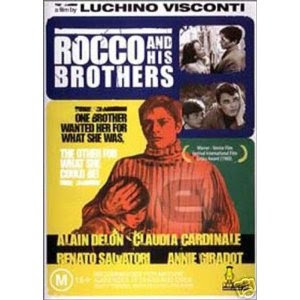 Contradictions are apparent everywhere. The film may not always make narrative sense, but this is the consequence of Visconti as zealot. Dramatizing the social consequences of Italy's internal Diaspora from South to North is no small mission. His contradictory goals are to make one family socially typical, yet also individually compelling. This is clearly not a sexy concept, yet somehow Visconti more or less pulls it off. All of the characters may be 'types,' yet all are given enough individual character touches that they transcend the problem of being contrived and overwrought that dogs so many other Visconti and Rossellini works.
The central conflict of the film is between the saintly Rocco (Alain Delon) and his ruthlessly hedonistic brother Simone (Renato Salvatori) over the love of a beautiful prostitute, Nadia (Annie Girardot). This clichéd love triangle is compelling thanks to the quality and beauty of the performers. Passion burns the candle at both ends, 24 hours a day for this whole mad Sicilian family. Forced by dire poverty to move from the Sicilian countryside to Milan, the Porondis, a widowed mother and her four young sons, join the oldest son, who's already got a steady job and a fiancé in the big city. Rocco, his mother, his brothers, the prostitute: they all begin as "types". Sure, there's a lot of "Mamma mia!" and hands raised to the Lord in despair. Sure, there's a lot of sweaty machismo. The boys spend a lot of time shouting at each other in their singlets. Yet the inescapable fact is that you can forget about the politics and the stereotypes. The Porondis are all very good looking and way cool!
Somehow, unlike his more mechanical attempts at propaganda in The Red Desert and The Damned, Visconti fell in love with his characters. The director lavishes his settings and characters with a pure Dickensian detail. As with his other masterpiece, The Leopard, Visconti shows a brilliant flair for tragedy and earthy good humor. As the inexorable logic of the plot and the fastidious peeling-of-an-onion detail take place, you can throw away all the specious chit-chat about social-realism and propaganda and just love this movie for what it is.
From the moment they arrive in Milan carrying bags of oranges and wax poetic at their first glimpse of snow, we are with the Porondis and aware of their collective naïveté. In no time at all, Simone (Renato Salvatori) becomes a prizefighter, part of a sleazy gangster's stable of broken-nosed, cauliflower-eared stumblebum gladiators. After winning a few fights, the fruits of victory for Simone are the free drinks and meals offered by nightclub owners. Taking up with a prostitute girlfriend, Nadia, (Annie Girardot) doesn't improve matters. Soon, however, Simone introduces them all to the poison of commercialism, corruption and urban brutality. After doing his military service, the saintly Rocco returns home to find no work and is forced to become a boxer, too. A few good paydays foment jealousy as Nadia, trying to 'reform' at the behest of Rocco and his long-suffering mother (Katina Paxinou), sleeps once again with Simone but flirts dangerously with Rocco. In the strongest scene in the film, the vicious Simone rapes the reformed prostitute right before the gentle Rocco's eyes and then slugs it out with him. This scene rings so true, the reality of the triple defilement is so powerful, so saturated with emotion and violent ambivalence that its rawness is shocking. I defy anyone to watch this scene and not be equally moved and exhausted by it. Anyone who thinks Alain Delon was just a blue-eyed, jet-black locked hunk of prettiness needs to see Rocco.
Throughout the film, Visconti swoops with his camera all over the streets of Milan, offering little stares at paving stones, children, people with other stories, and nooks and crannies full of daily grime and grunge. The passionate emotions of the characters and the screeching drama of the characters sting an audience into a state of empathy and wakefulness. It's Douglas Sirk on steroids. All deeply felt by its director and his ensemble.
Nino Rota's beautiful, passionate score is wonderful. Although Rota is best known for his association with Federico Fellini, his work here is clearly among his best.
Clocking in at 168 minutes, this is a demanding film. For anyone who insists the sixties started with the Beatles and La Dolce Vita, I'd suggest that they really need to start here.
Luchino Visconti's Rocco and His Brothers (1960) is a marvelous cautionary tale about survival in hard times. 50 years old now, it still holds up splendidly. A strange blend of social realism and operatic melodrama, it somehow still works splendidly. Made by a man of deep contrasts, Visconti was from a ridiculously rich noble family with roots going back to Charlemagne, yet still a committed Marxist. One of the Big Three of Italian NeoRealism, along with Roberto Rossellini and Vittorio de Sica, Visconti's work demonstrated a conflict between his Social Realist interests and his experience as a renowned opera director at La Scala, which was steeped in the Western aesthetic tradition. Thus, in Rocco & His Brothers, we have a sort of hysterical hybrid – a black-and-white soap opera with an equal amount of street grit--performed by an ensemble of real and amateur actors.

The central conflict of the film is between the saintly Rocco (Alain Delon) and his ruthlessly hedonistic brother Simone (Renato Salvatori) over the love of a beautiful prostitute, Nadia (Annie Girardot). This clichéd love triangle is compelling thanks to the quality and beauty of the performers. Passion burns the candle at both ends, 24 hours a day for this whole mad Sicilian family. Forced by dire poverty to move from the Sicilian countryside to Milan, the Porondis, a widowed mother and her four young sons, join the oldest son, who's already got a steady job and a fiancé in the big city. Rocco, his mother, his brothers, the prostitute: they all begin as "types". Sure, there's a lot of "Mamma mia!" and hands raised to the Lord in despair. Sure, there's a lot of sweaty machismo. The boys spend a lot of time shouting at each other in their singlets. Yet the inescapable fact is that you can forget about the politics and the stereotypes. The Porondis are all very good looking and way cool!
Somehow, unlike his more mechanical attempts at propaganda in The Red Desert and The Damned, Visconti fell in love with his characters. The director lavishes his settings and characters with a pure Dickensian detail. As with his other masterpiece, The Leopard, Visconti shows a brilliant flair for tragedy and earthy good humor. As the inexorable logic of the plot and the fastidious peeling-of-an-onion detail take place, you can throw away all the specious chit-chat about social-realism and propaganda and just love this movie for what it is.
From the moment they arrive in Milan carrying bags of oranges and wax poetic at their first glimpse of snow, we are with the Porondis and aware of their collective naïveté. In no time at all, Simone (Renato Salvatori) becomes a prizefighter, part of a sleazy gangster's stable of broken-nosed, cauliflower-eared stumblebum gladiators. After winning a few fights, the fruits of victory for Simone are the free drinks and meals offered by nightclub owners. Taking up with a prostitute girlfriend, Nadia, (Annie Girardot) doesn't improve matters. Soon, however, Simone introduces them all to the poison of commercialism, corruption and urban brutality. After doing his military service, the saintly Rocco returns home to find no work and is forced to become a boxer, too. A few good paydays foment jealousy as Nadia, trying to 'reform' at the behest of Rocco and his long-suffering mother (Katina Paxinou), sleeps once again with Simone but flirts dangerously with Rocco. In the strongest scene in the film, the vicious Simone rapes the reformed prostitute right before the gentle Rocco's eyes and then slugs it out with him. This scene rings so true, the reality of the triple defilement is so powerful, so saturated with emotion and violent ambivalence that its rawness is shocking. I defy anyone to watch this scene and not be equally moved and exhausted by it. Anyone who thinks Alain Delon was just a blue-eyed, jet-black locked hunk of prettiness needs to see Rocco.
Throughout the film, Visconti swoops with his camera all over the streets of Milan, offering little stares at paving stones, children, people with other stories, and nooks and crannies full of daily grime and grunge. The passionate emotions of the characters and the screeching drama of the characters sting an audience into a state of empathy and wakefulness. It's Douglas Sirk on steroids. All deeply felt by its director and his ensemble.
Nino Rota's beautiful, passionate score is wonderful. Although Rota is best known for his association with Federico Fellini, his work here is clearly among his best.
Clocking in at 168 minutes, this is a demanding film. For anyone who insists the sixties started with the Beatles and La Dolce Vita, I'd suggest that they really need to start here.
Tuesday, August 10, 2010
Ali: Fear Eats the Soul
Ivorismo Rating****
 Rainer Werner Fassbinder met Douglas Sirk at the Munich Film Museum in June 1971. As the history of cinema goes, this truly was a momentous event. Having sobered himself up and steered clear of the rough trade bars for more than two weeks, Fassbinder's aching temporary self-denial from his addictions put him into a state of agonized bliss. Buoyed at basking in the light of the maestro, Fassbinder sat next to him through six of his German-born idol's films. The directors became uber close friends, sharing a correspondence, and Fassbinder--up to that point viewed by Germany's small coven of art critics as a clever former television director with a chip on his shoulder, a provincial East German exile with a penchant for self-advertizement--was able to re-imagine his personal cinema in a completely new way. Sirk, famous for such Hollywood melodramas as All That Heaven Allows, Imitation of Life, and Written on the Wind, walked across Fassbinder's mind like a colossus. Sirk's influence on the flaming young German upstart was both theoretical and aesthetic. Finally freeing himself from the kind of rigid, proto-Marxist thinking that compelled him to spawn what he snarkily referred to as "an oeuvre of orthodoxy," Fassbinder leavened his thinking.
Fassbinder’s metaphor-laden exposés of heartless social ostracism in West Germany had already became more gentle after The Merchant of Four Seasons. Yet his sometimes brutal directorial "touch" still remained very much the same. What Fassbinder adored about Sirk was his remarkable ability to fuse social commentary with soap opera in his screenplays. What we have in Fassbinder's masterpiece Ali: Fear Eats the Soul is a sort of loose bebop version of Sirk's All That Heaven Allows. It may not be his most famous film, that kudos tends to go toward Fassbinder's more rigorous, politically correct and historically specific tomes to German history, Veronika Voss, Lili Marlene and The Marriage of Maria Braun, all of which were box office hits throughout the world. Far more eternal than Fassbinder's ironic takes on the modern German state's history, Ali’s story unravels like a bittersweet ball of steel wool. A postindustrial Deutschkeit fable about the fruits of racism and intolerance, it entertains just like Sirk's famous melodramas. Fassbinder's goal as an auteur was not just to subject his characters to the soap operatic beauty of pure misery so much as it was to expose such social mechanisms as racism and suburban conformity reeking havoc on his characters before they have ever loved.
In Ali: Fear Eats the Soul, a lonely, depressed cleaning lady, Emmi (Brigitte Mira), falls in love with and marries a Moroccan worker, Ali (El Hedi ben Salem). This leads to her being vilified by everyone in her world, especially her immediate family. Indeed, Fassbinder wastes no time in foreshadowing Emmi's dilemma from the start. Walking into the tavern where she first meets Ali, Emmi sees everyone freeze as she makes conversation with the big awkwardly handsome Arab. Fassbinder frames his scenes within windows and doorways and from within a room full of bright yellow chairs. Racism and a sense of isolation dog these characters in this 'new' West Germany. At the same time, Fassbinder's dialogue is filled with the clichés of middle class wannabeism. "All this work," Emmi says with a remarkable sense of gravity and innocence, as if she's pontificating upon a manifesto, "to get a little piece of Heaven."
I've been doing my German homework. I got in touch with my Swabian friend Martin and he pointed me in the correct direction. This is because the film's original German title reads Angst essen Seele auf, which actually translates as "Fear Eat Soul", while the correct German form would be Angst isst die Seele auf. Deliberately rendered grammatically incorrect, the original title alludes to both Ali's terrible German and his shockingly naïve innocence. Ali's speech is ripe with Chance Gardner/Forest Gump-style aphorisms --"Think much, cry much" and "Money spoil friendship"--to the point where his talking seems canned and mechanical. Consequently, Fassbinder's genius is that, while he has created a sort of transposed facsimile of All That Heaven Allows, the cultural predicament explored in Sirk's film pales by comparison.
The wicked are everywhere in Ali: Fear Eats the Soul. They constantly refer to the Turk and his uncivilized behavior. Yet they are the ones who smash in television sets, engage in vicious scurrilous gossip, and make nasty accusations toward the kindhearted Emmi. The film's infamous sea-of-yellow-chairs sequence clearly presages a rhetorical alteration in its view of a society's ambivalence about racism. Out of nowhere, people change. Emmi's crying and oft stated forgiveness for everybody have suddenly healed the wicked world. Inexplicably, the racists have gone through a period of redemption. Even Emmi's obnoxious son Bruno (Peter Gauhe), clearly a racist and never forgiven by his mother for killing the family cat, sends his mother a check for a new television. On the street, Emmi's perverse gossipy neighbors stop to make conversation and ask for favors, complimenting her for her constant kindness.
Change and forgiveness, for Fassbinder, forever the butch masculine queer outsider, whether it's sudden, organic, surreal, or magical, is a natural part of human progress, but still ought to be viewed in a cynical way. Still, the audience may indeed ask if it's really progress if a local shopkeeper begins to act politely with Emmi—despite her husband's brown face—because, really, she simply doesn't want to lose her business? Indeed, Ali: Fear Eats the Soul's second half shows how the constantly silent Ali is also affected by his sudden social acceptance. The 'good' neighbors who used to rant about Emmi bringing dirt into their building ooh and ah over the Moroccan’s big muscles. Ali: Fear Eats the Soul may even evoke a sort of Reaganite ideal to cure a racist world. The trickle-down effect of new money can conquer all resistance once the locals become willing to take a seat on the gravy train.
Still, when it comes to the human soul, neither words nor deeds are quite enough. Fassbinder insists there is still much construction work to be done. Ali is his masterpiece!
Subscribe to:
Posts (Atom)